Natural selection is a mechanism by Darwin to explain evolution. This mechanism was elegant and logical, and it explained how populations could evolve (undergo descent with modification) in such a way that they become better suited to their environments over time.
Darwin’s concept of natural selection was based on several key observations:
- Traits are often heritable. In living organisms, many characteristics are inherited, or passed from parent to offspring.
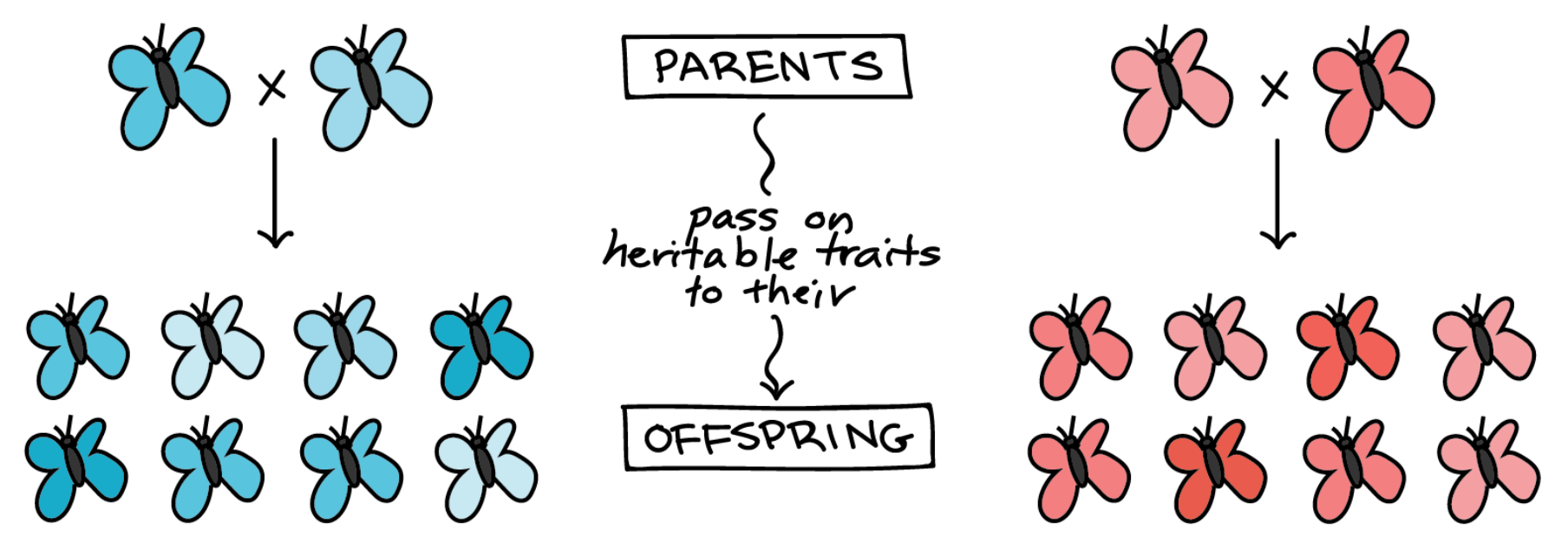
- More offspring are produced than can survive. Organisms are capable of producing more offspring than their environments can support. Thus, there is competition for limited resources in each generation.
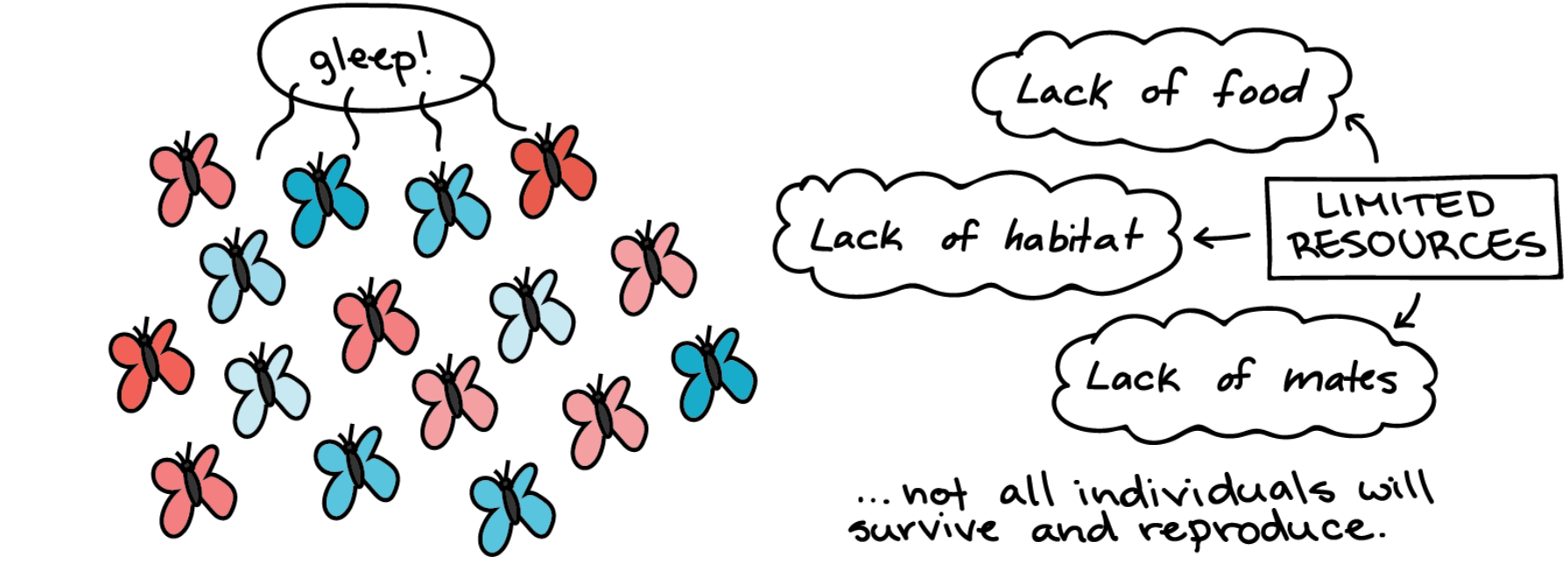
- Offspring vary in their heritable traits. The offspring in any generation will be slightly different from one another in their traits (color, size, shape, etc.), and many of these features will be heritable.
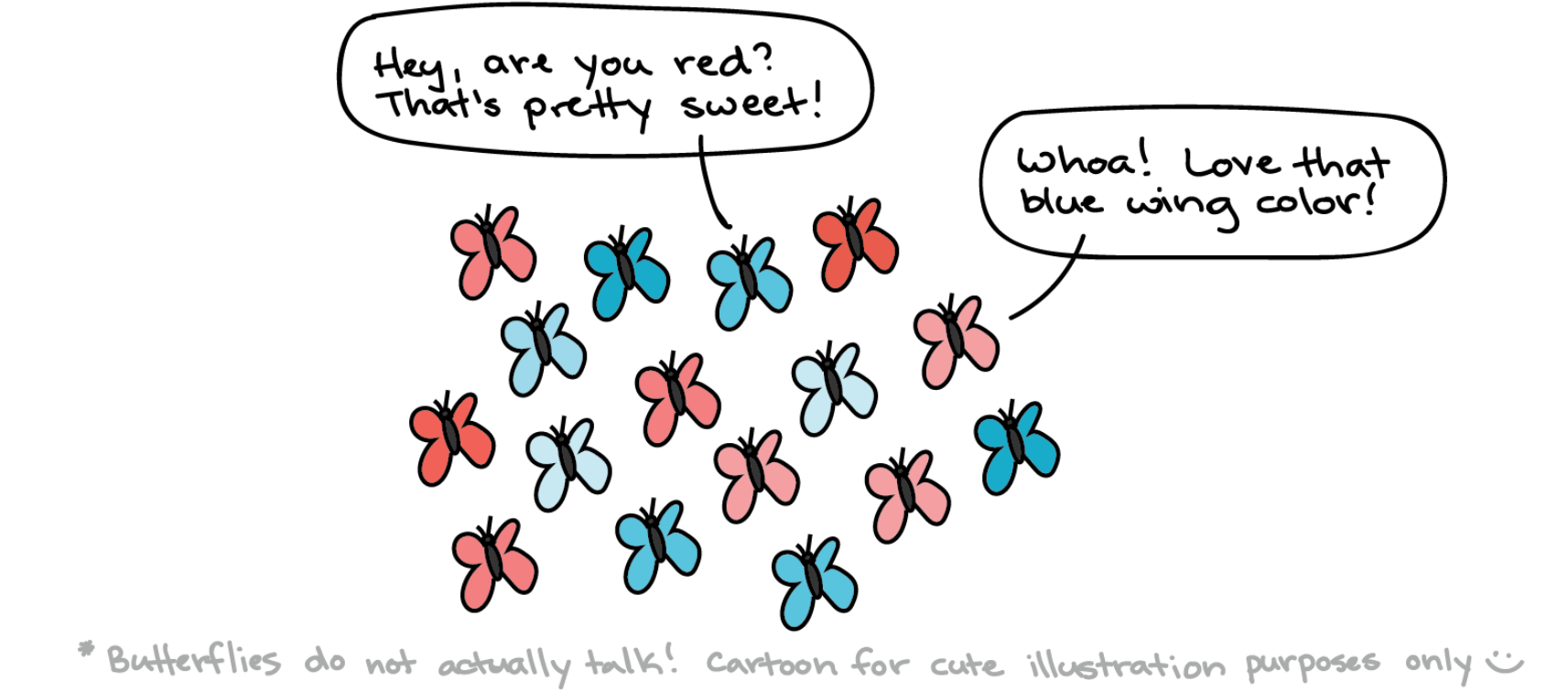
Based on these simple observations, Darwin concluded the following:
- In a population some individuals will have inheritable traits that help them survive and reproduce (given the conditions of the environment, such as the predators and food sources present). The individuals with the helpful traits will leave more offspring in the next generation than their peers, since the traits make them more effective at surviving and reproducing.
- Because the helpful traits are heritable, and because organisms with these traits leave more offspring, the traits will tend to become more common (present in a larger fraction of the population) in the next generation.
- Over generations, the population will become adapted to its environment (as individuals with traits helpful in that environment have consistently greater reproductive success than their peers).